
The August Kranti Maidan is a large open space with a central lawn and several trees providing shade. It is surrounded by roads on all sides and is easily accessible by foot, car, or public transportation. The park is named after the Quit India Movement, which was launched on August 9, 1942, at the park. At the time, Mahatma Gandhi made a call for non-violent resistance against British rule in India, and the movement quickly gained widespread support. The park became a key gathering place for protestors, who would hold rallies and meetings there to plan their actions.
Over the years, the August Kranti Maidan has continued to be a hub for political and social activism in Mumbai. It has been the site of many important protests and demonstrations, including those related to issues such as corruption, civil rights, and women’s rights. In addition to its historical and political significance, the park is also a popular destination for locals and tourists who want to escape the hustle and bustle of the city and enjoy some fresh air and greenery. The park is well-maintained, with clean pathways and facilities such as restrooms and food stalls available for visitors.

Context:
- Figure Ground Study
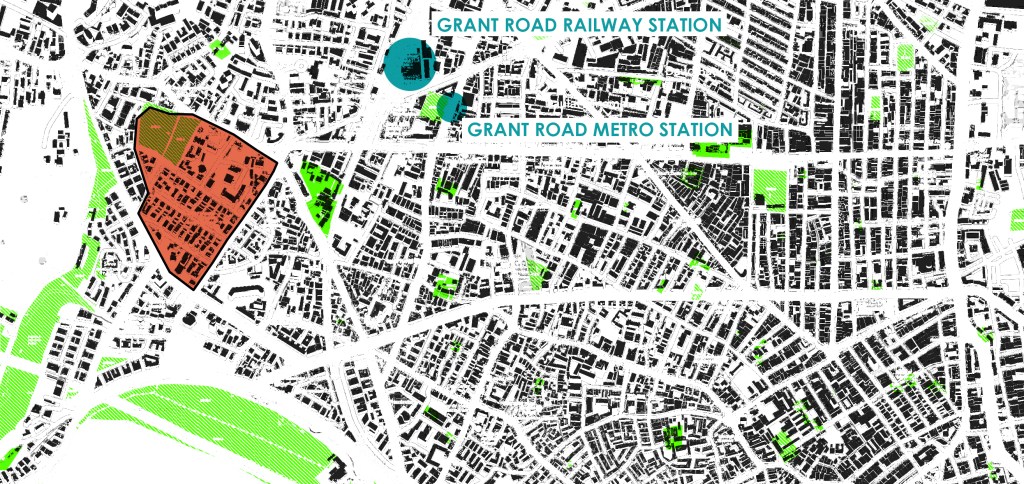
In urban design, figure-ground studies can be used to analyze the relationships between buildings and the spaces around them in a city or town. These studies can help urban designers understand how the design of the built environment affects the way people experience and navigate the city, and can inform the planning and design of public spaces and buildings to better meet the needs of the community.
In a figure-ground study of an urban area, the figure is typically the buildings and other structures that make up the city, while the ground is the space between and around these structures. The study might examine how the size, shape, and orientation of buildings affect the character of the streets and public spaces around them, and how the layout and design of these spaces influence the way people move through and use the city.
Urban design figure-ground studies may also consider how the physical characteristics of the built environment, such as the height and density of buildings, the width and type of streets, and the availability of open spaces, affect the way people perceive and experience the city. These studies can help urban designers understand the trade-offs and impacts of different design decisions, and can inform the planning and design of urban areas to create more livable, sustainable, and enjoyable cities.
2. Development Plan 2034
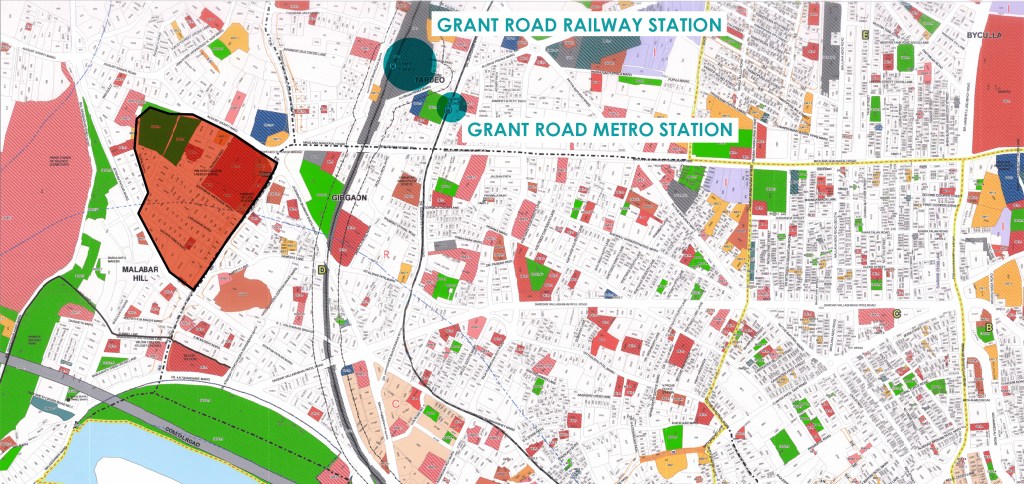
The August Kranti Maidan is located in D-Ward and is surrounded by public land use areas, including those for education, health, public utilities and facilities, and social amenities. The site is also surrounded by green spaces, such as playgrounds, green belts, and parks. It is located within walking distance of several transportation options, including the Grant Road Railway station, the proposed Grant Road Metro Station, and the Mumbai Central Railway station. It is also close to several popular tourist attractions, including Hanging Gardens, Girgaon Chowpatty, and Priyadarshini Park. The site is flanked by Hughes Road to the west and Pandita Ramabai Marg to the east. Hughes Road connects Haji Ali to Girgaon, while Pandita Ramabai Marg connects Hughes Road to Nana Chowk to the northwest of the precinct.
Study:
- Land Use
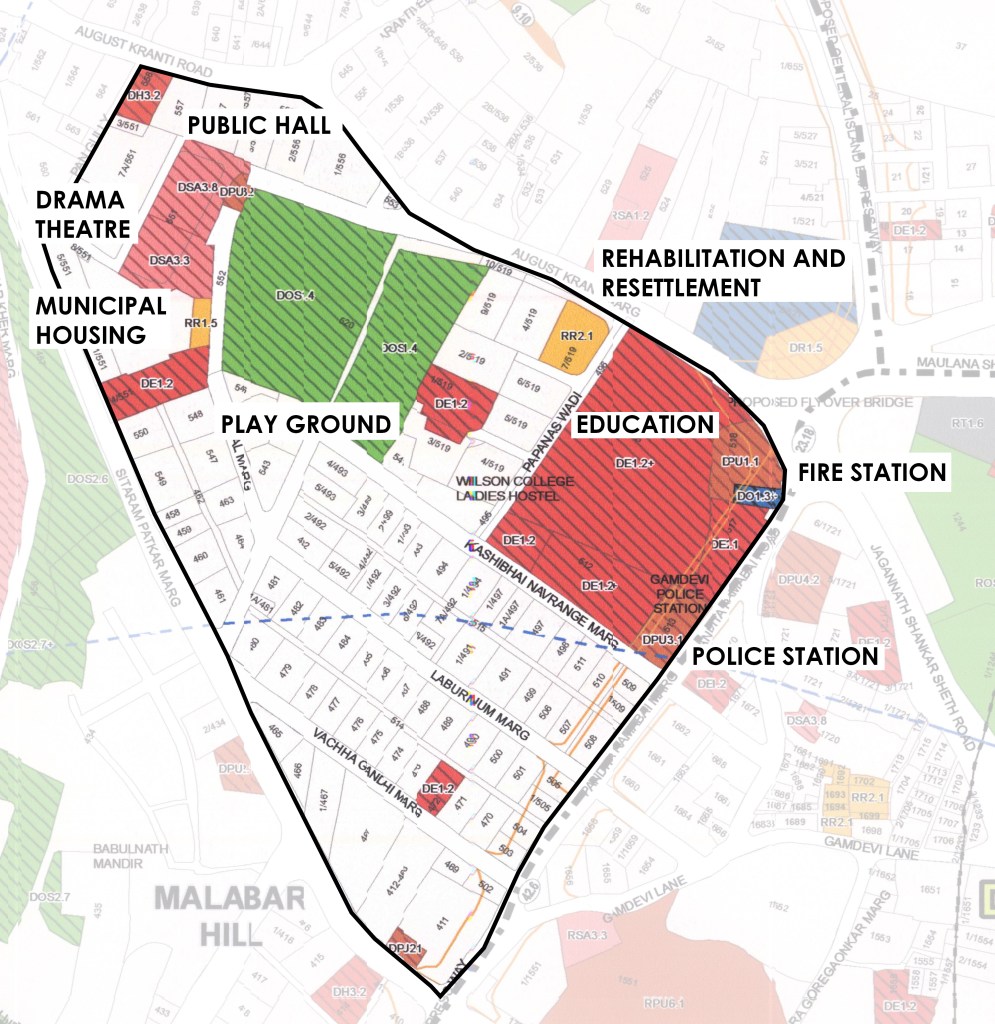
The majority of public land use areas, including amenities such as playgrounds and educational facilities, are located on the northern side of the precinct near August Kranti Marg. According to the Development Plan (DP), this area includes a number of public amenities, including a playground at August Kranti Maidan and the Tejpal Hall, which serves as both a public hall and drama theater.
2. Building Use
The August Kranti Maidan precinct is primarily residential, with a few institutional buildings scattered throughout the area. These institutions attract people from outside the precinct and can be used to host events and activities within the precinct. Students, youth, and other groups can organize events to make the area more vibrant, and allowing for limited mixed use on the ground level of some residential buildings can also help to enliven the street interface. Overall, the precinct has the potential to leverage its institutions and mixed-use spaces to create a more vibrant and active community.

3. Building Height
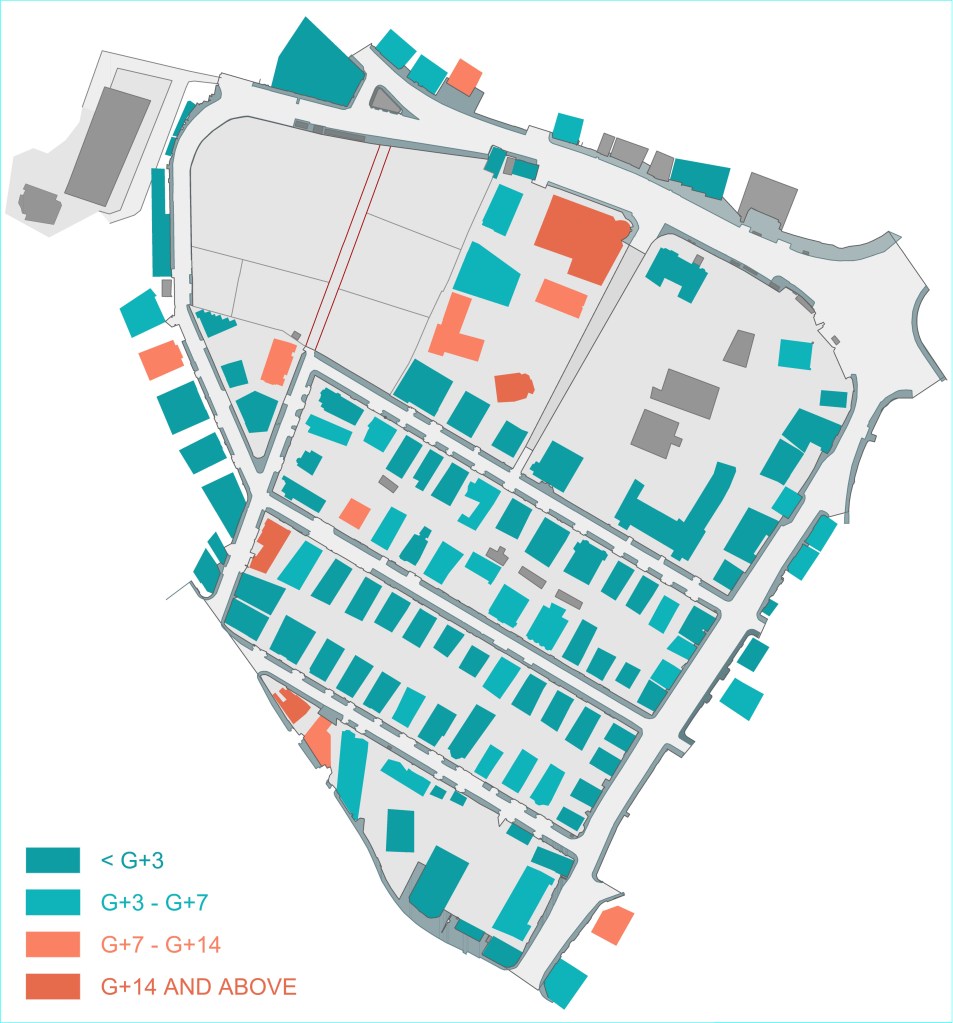
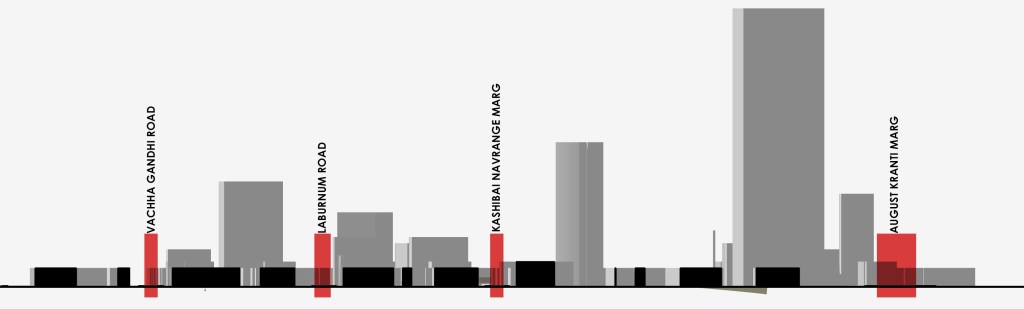
The majority of buildings in the August Kranti Maidan precinct are relatively low in height, which creates a human-scale public realm between them. However, the lower density of the area also means that there are fewer people on the streets.
4. Trees and Vegetation
There are a significant number of trees along the main internal pathways within the precinct, which provide shade and improve the air quality in the area. To ensure that these benefits are maintained, regular maintenance is needed to keep the roads clear of fallen leaves. The trees also serve as a natural barrier to road widening. The only open space within the precinct is the August Kranti Maidan.

5. Lighting
The precinct has adequate infrastructure for lighting, but the high foliage trees and tall lamp posts reduce the amount of light that reaches the pathways and roads. There is a need for more human-scale lighting in the area. Lighting design can be used to create a more memorable and ambiance in the precinct, particularly on heritage structures. By using building lighting to indirectly light the streets, visibility and safety in the area can be improved.

6. Vehicular Circulation
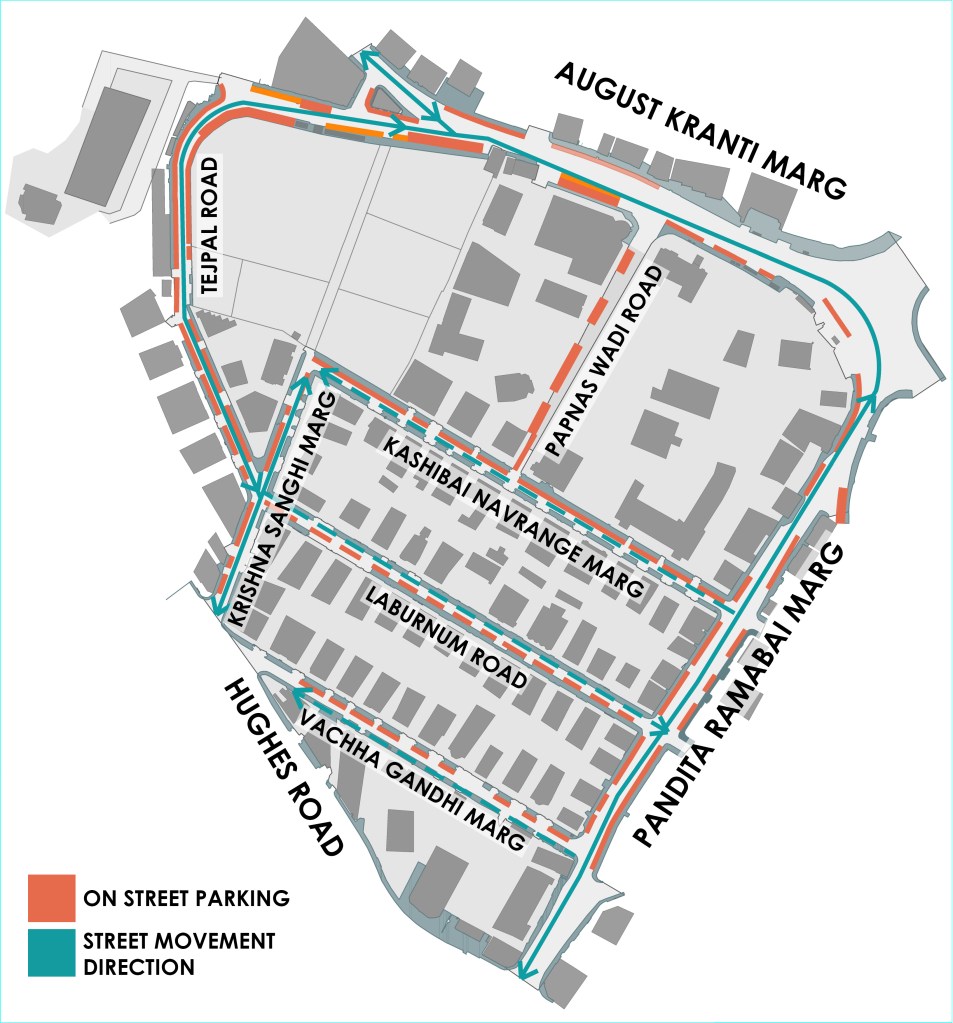
The internal roads within the precinct are sufficient for the density of the area, but they are one-way roads with on-road parking on one side. This can create parking problems for residents and visitors, who often have to park on the street due to a lack of parking infrastructure within the buildings. The space north of the Gandhi Memorial is used as a parking area for tempos, but it would be better suited for pedestrian or cycling use, or for tourists. Defining specific parking areas within the precinct could help to reduce conflicts with the carriageway. Tourist buses currently stop at a junction near Mani Bhavan on Gamdevi Police station road.

7. Pedestrian Circulation
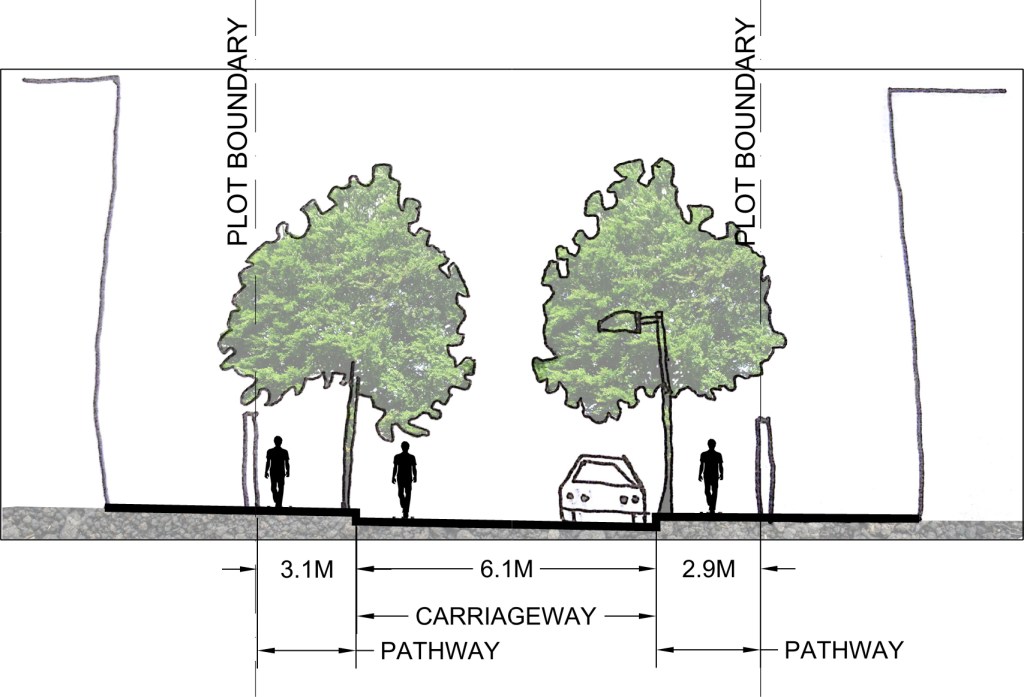
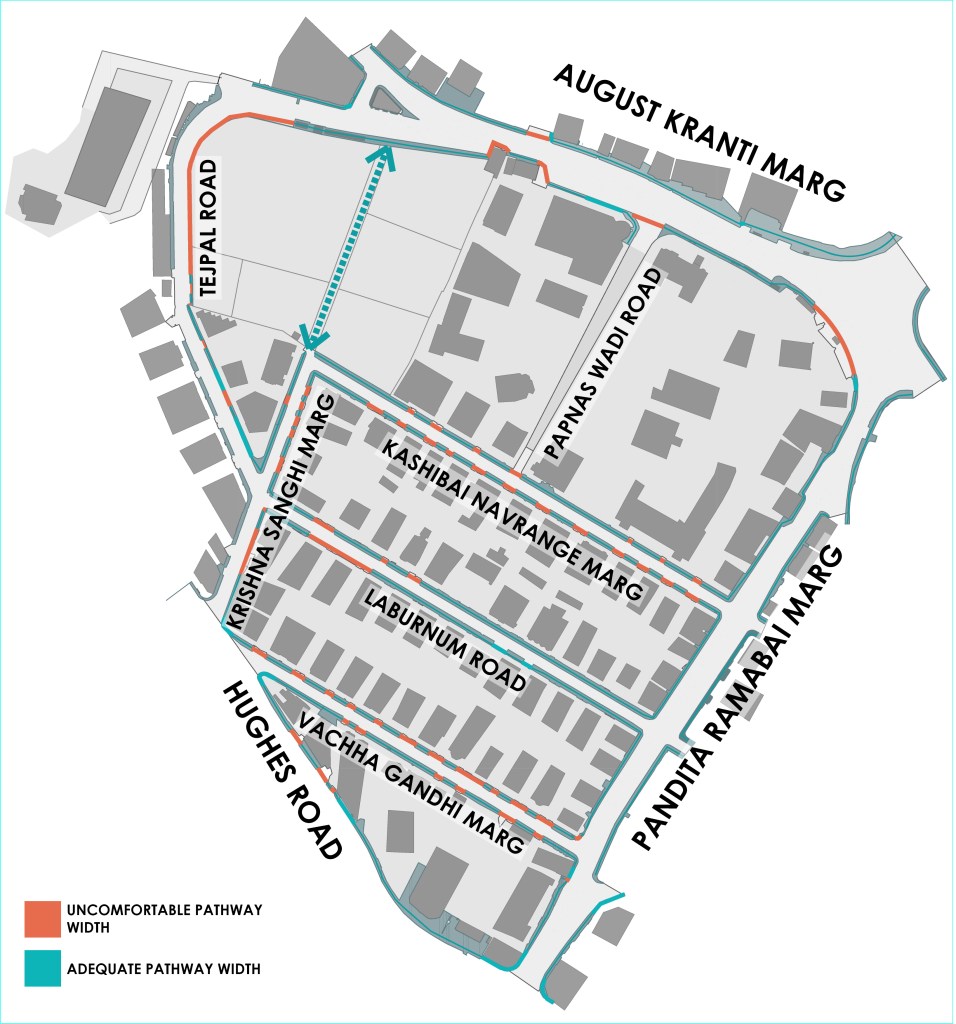
The existing August Kranti Maidan is completely pedestrian, and the main maidan is safe for pedestrians. However, the pathways around the precinct are not continuous or uniformly level, and their widths vary along their length. This makes some sections of the pathways unusable, which forces pedestrians to walk on the carriageway. Some areas of the walking surface also need to be redone. To improve pedestrian safety and accessibility, the precinct should create a safe movement corridor and provide wider pathways in front of institutional buildings, where people tend to congregate. These changes can be easily implemented with minimal intervention.
8. Heritage Structures (as per Heritage List)

A. Mani Bhavan
Mani Bhavan is a museum and library located in the Gamdevi neighborhood of Mumbai, India. It was the home of Mahatma Gandhi from 1917 to 1934, and it served as a base for his political activities during the Indian independence movement.
Mani Bhavan has great historical and cultural significance as a symbol of Gandhi’s philosophy of non-violent resistance and civil disobedience. It was here that Gandhi planned and coordinated many of the key campaigns and boycotts that helped to bring about the end of British rule in India. The museum displays photographs, documents, and other artifacts related to Gandhi’s life and work, and it is visited by thousands of tourists and students every year.
In addition to its historical and cultural importance, Mani Bhavan is also a popular destination for those interested in Gandhi’s philosophy and its relevance to contemporary issues. The museum hosts a variety of educational programs, lectures, and workshops, and it serves as a meeting place for those who are committed to Gandhi’s ideals of peace, justice, and non-violent change.
B. Mahatma Gandhi Memorial
The Mahatma Gandhi Memorial, also known as the Gandhi Memorial or Gandhi Samadhi, is located in the August Kranti Maidan in Mumbai, India.
The Gandhi Memorial is a popular tourist destination and a place of pilgrimage for those who admire Gandhi’s philosophy of non-violent resistance and civil disobedience. It is also a popular venue for political and social events, and it is frequently used as a gathering place for protests and rallies.
The Gandhi Memorial is a simple structure consisting of a stone platform and a statue of Gandhi. It is surrounded by a garden and a small museum, which displays photographs, documents, and other artifacts related to Gandhi’s life and work. The memorial is visited by thousands of people every year, and it is an important symbol of Gandhi’s legacy and the values he stood for.
C. Tejpal Hall
Tejpal Hall has great historical significance as a symbol of the cultural and political life of Mumbai. It has been the site of many important events and gatherings, including concerts, plays, lectures, and political rallies. It has also served as a center for cultural and artistic expression, hosting exhibitions, film screenings, and other events.
In addition to its cultural and historical importance, Tejpal Hall is also a popular destination for locals and tourists who are interested in experiencing the vibrant cultural life of Mumbai. The hall is well-maintained and has facilities such as restrooms and food stalls available for visitors. It continues to be an important hub of activity in the city, and it is an enduring symbol of the cultural and political history of Mumbai.
D. Dr. Petit Statue
Nusserwanji Maneckji Petit was a prominent businessman and philanthropist in 19th and early 20th century India. He was born in 1838 in Mumbai (then known as Bombay) and was the son of a wealthy merchant. Petit received an education in both Western and Eastern subjects, and he became fluent in several languages, including English, French, and Persian.
Petit made his fortune in the cotton trade, and he used his wealth to support a number of charitable causes. He was a founder and director of the Bombay Parsi Punchayet, a charitable organization that supported education and social welfare programs for the Parsi community in Mumbai. He also donated generously to a number of other causes, including the construction of hospitals, schools, and other public works.
In recognition of his contributions to society, Petit was knighted by the British government in 1887, and he received a number of other awards and honors throughout his life. He died in 1901, but his legacy as a philanthropist and public figure continues to be remembered and celebrated in India.
E. Pandita Ramabai
Pandita Ramabai was a pioneering social reformer and educationist in India during the late 19th and early 20th centuries. She was born in 1858 in Maharashtra, and she was the first woman in India to receive a degree in western medicine.
Ramabai was a vocal advocate for the rights and education of women and children in India, and she worked tirelessly to promote social reform and gender equality. She founded the Sharada Sadan, a home for widows and orphaned girls, and the Arya Mahila Samaj, a women’s organization that aimed to educate and empower women.
In addition to her work in education and social reform, Ramabai was also a noted writer and translator. She translated the Bhagavad Gita and other Hindu scriptures into English, and she wrote several books on education, women’s rights, and social reform. She died in 1922, but her legacy as a pioneering social reformer and educationist continues to be remembered and celebrated in India.
F. Mrs. Margaret Wilson
Mrs. Margaret Wilson was a missionary from Scotland who, along with her husband Dr. John Wilson, founded St. Columba School in Girgaum, Mumbai in 1832. The school was started with the aim of providing education to girls, and it was named after the Scottish saint St. Columba. Mrs. Wilson believed strongly in the importance of education, and she wrote about the importance of educating girls in a contemporary Marathi newspaper called “Darpan.” Today, the school is managed by the John Wilson Education Society and is owned by the Church of North India. It continues to be a prominent educational institution in Mumbai, offering education to both girls and boys.
This proposal was developed as part of a larger proposal during my tenure as principal architect at Tau Collective, alongside Architects Neha Karayi and Swapnil Kulkarni.
 Daniel Neville D'Souza